Malaysian Qualifications Agency
The Malaysian Qualifications Agency (MQA) is Malaysia’s national quality assurance agency responsible for implementing the Malaysian Qualifications Framework (MQF). Operating under the authority of the Minister of Higher Education, MQA develops national standards, credit systems, and other reference instruments for higher education. It is also responsible for assuring the quality of higher education institutions and study programmes, as well as accrediting academic programmes and qualifications in Malaysia.
For further information MQA
Malaysia–Germany Higher Education Summit 2026
On 4–5 November 2026, Berlin hosted the Malaysia–Germany Higher Education Summit 2026, bringing together more than 70 representatives from 17 countries to exchange perspectives, explore new opportunities and strengthen international partnerships in higher education.
The Summit was jointly organised by the Malaysian Qualifications Agency (MQA), the Embassy of Malaysia in the Federal Republic of Germany, and FIBAA, reflecting the shared commitment to fostering closer cooperation between the Malaysian and German higher education sectors.
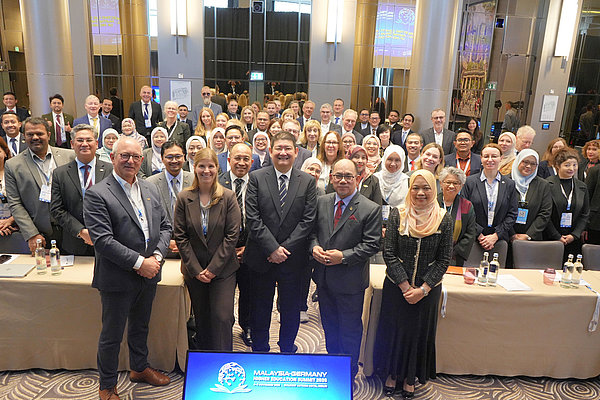
The opening session featured welcoming remarks by H.E. Mohamad Razdan Bin Jamil, Ambassador of Malaysia to Germany, and Dr. Nina Rotermund, Managing Director of FIBAA. Keynote addresses were delivered by Prof. Dr. Ottmar Schneck, Chairman of the Association of Private Higher Education Institutions in Germany (Verband der Privaten Hochschulen e.V.), and Dato’ Prof. Dr. Mohammad Shatar bin Sabran, Chief Executive Officer of MQA.
The two-day programme addressed key developments and challenges shaping the future of higher education, with a particular focus on:
-
Transnational Education (TNE) and opportunities for international academic partnerships;
-
Artificial Intelligence in Higher Education, including its implications for teaching, learning and quality assurance;
-
Micro-Credentials and Lifelong Learning as approaches to more flexible and accessible education.
The programme also featured presentations introducing Malaysian higher education institutions and poster sessions showcasing innovative projects and initiatives developed by German and Malaysian institutions.
Beyond the formal sessions, the Summit offered valuable opportunities for networking, exchanging experiences and establishing new connections among representatives of higher education institutions, quality assurance agencies and other stakeholders.
